Yes, caravan travel is safe in the monsoon if you stick to sensible routes and travel with an experienced driver — but “safe” depends heavily on where you’re going and how you’re getting there. The risk isn’t the caravan itself; it’s the road.
Why monsoon road trips carry real risk
Rain doesn’t just make driving uncomfortable — it changes what a road can handle. Wet slopes lose grip, loose debris and fallen rock become a regular hazard on hill routes, and low-lying river crossings can rise faster than they look. Some of India’s most scenic drives — the Char Dham highways through Uttarakhand’s Garhwal Himalaya, for instance — are routinely suspended by authorities during heavy rain, not as an overreaction but because those gorges are genuinely landslide-prone in the monsoon.
None of this means monsoon travel is off the table. It means route choice matters more than usual.
What actually makes caravan travel safer here
A driver who knows the route, not just the destination. Self-drive monsoon travel means making real-time calls about road conditions you’ve never seen before — reading a landslide risk, judging a water crossing, deciding whether to push on or wait it out. With a caravan and a professional driver, that judgment call sits with someone who’s driven the route in bad weather before.
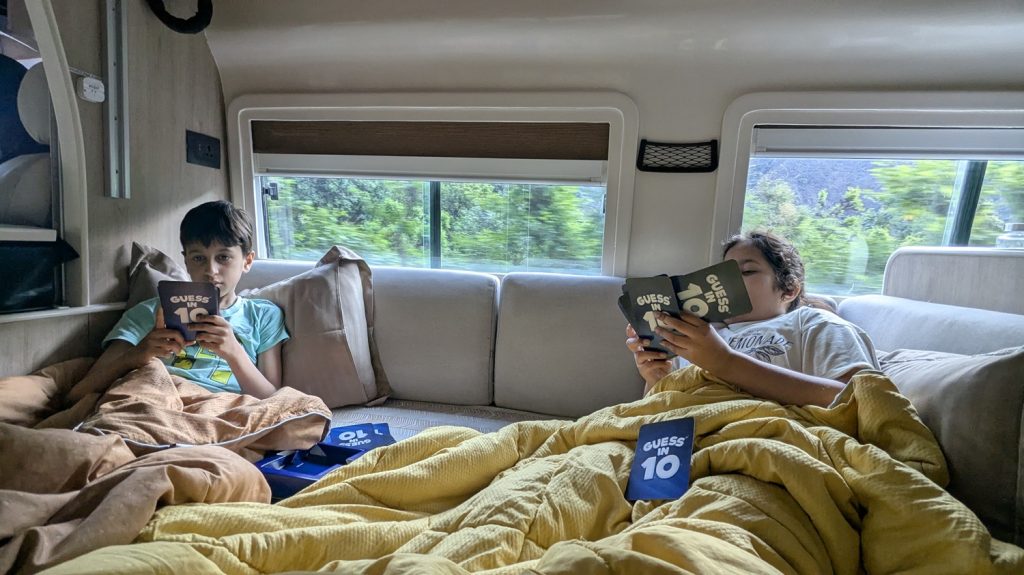
You’re never stuck outdoors when the sky opens. Tents and open-air stays turn a sudden downpour into a genuine problem — wet gear, flooded ground, nowhere dry to sit. A sealed, insulated caravan removes that risk entirely.
Flexible plans without a hotel booking on the line. Monsoon trips sometimes need a change of route or an early stop. Caravans aren’t tied to a single destination the way a hotel reservation is — if a road looks bad, the plan can shift without losing a non-refundable booking.
What you should still check before booking
- Avoid high-altitude, gorge-hugging routes in heavy rain — parts of the Garhwal Himalaya (Kedarnath, Badrinath, Gangotri, Yamunotri highways) see routine monsoon closures. If your destination requires one of these roads, build in buffer days.
- Never travel a hill road after dark in heavy rain. Most landslide-related accidents happen at night or in low visibility, when debris or a washed-out edge simply can’t be seen in time.
- Stay away from riverbanks, waterfalls, and low bridges during the trip, not just while driving to it — water levels on these can rise faster than expected.
- Check the specific route’s status the morning you travel, not the week before. Monsoon road conditions change quickly, and a clear road at breakfast can close by evening.
The honest takeaway
Monsoon travel is safe with the right precautions, but it’s not risk-free in the way a winter or summer trip is. The safest monsoon caravan trips lean toward lower-altitude, well-maintained routes — Neemrana, Bharatpur, Lansdowne, and Kasauli, for example — over ambitious high-Himalaya routes where road closures are a real possibility, not a remote one.
FAQ
Are all hill stations risky in the monsoon?
No — risk varies a lot by region. Lower-altitude, well-maintained routes are generally safer than high-Himalaya gorge roads, which see routine monsoon-season closures.
What happens if a route is closed mid-trip?
A driver-operated caravan can reroute or hold at a safe stop until conditions clear — something that’s much harder to manage with a fixed hotel itinerary.
Is night driving ever necessary during a monsoon caravan trip?
It shouldn’t be, and a good itinerary avoids it by design — hill roads after dark in rain are where most landslide-related incidents happen.